Family entertainment parks are often judged by attraction mix, attendance, revenue, capacity, and customer satisfaction. Those indicators matter, but they can hide deeper weaknesses in the way the total family experience is designed and renewed.
The FEC Gap framework treats the park as an experience system rather than a collection of equipment. A family arrives with expectations, moves through the environment, waits, eats, rests, makes decisions, interacts with staff and other guests, experiences emotions, and leaves with a memory of the visit.
The framework organizes recurring weaknesses across areas such as novelty and repeat visitation, child development, personalization and progression, parent experience, social programming, accessibility and comfort, technology, operations, business model, and storytelling.
One of the most important implications is that an apparent attraction problem may actually be a system problem. Declining repeat visitation does not automatically mean the park needs another expensive attraction.
Before replacing equipment, operators can ask whether existing attractions have new levels, missions, competitions, stories, social formats, changing content, or saved progress. They can also ask whether parents understand the value of returning and whether the visit creates an unfinished reason to come back.
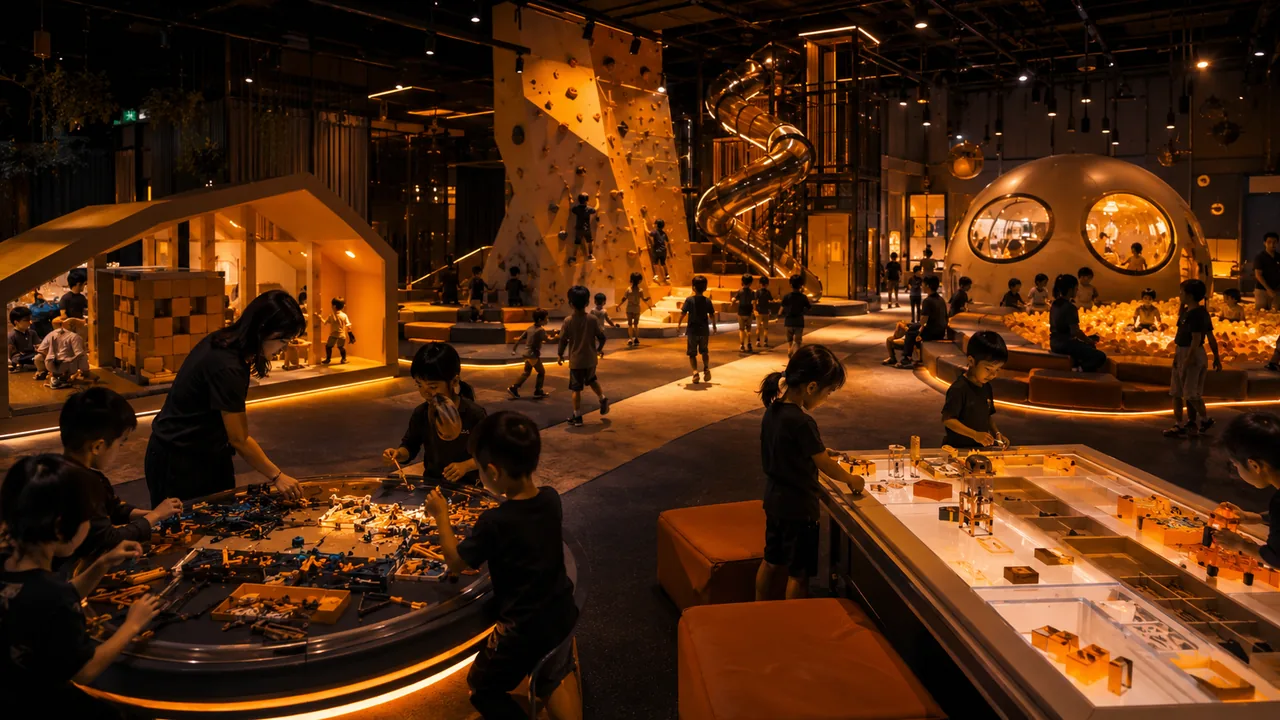
The framework does not argue against trampolines, slides, climbing, arcades, ropes courses, or soft play. These can remain powerful attractions. The issue is what families can do with them over time and how each attraction contributes to the wider experience.
A stronger family entertainment system can combine physical play with challenge, creativity, social connection, family participation, progression, and changing programming without making the park feel like a classroom.
The practical question becomes broader than “Which attractions should we buy?” It becomes: which gaps matter most for our families, and which changes can measurably improve the experience and the reasons to return?